
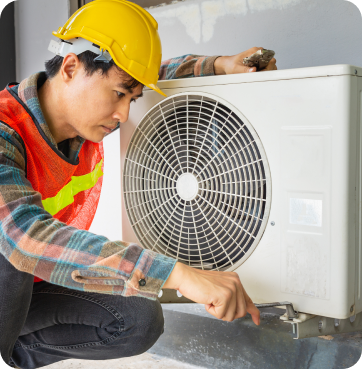
Air Filters
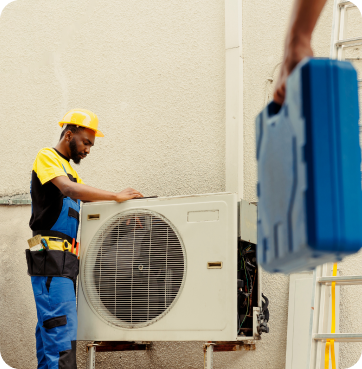
Evaporator and Condenser Coils
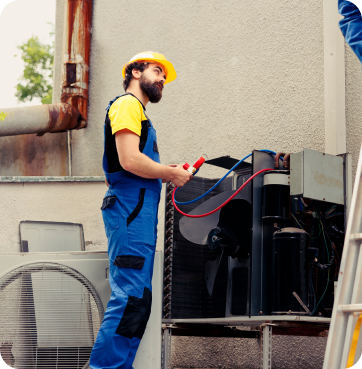
Fan Blades and Motors
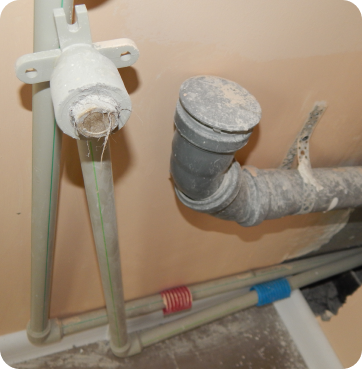
Condensate Drain Lines
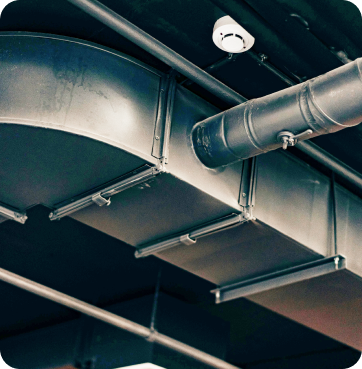
Ductwork
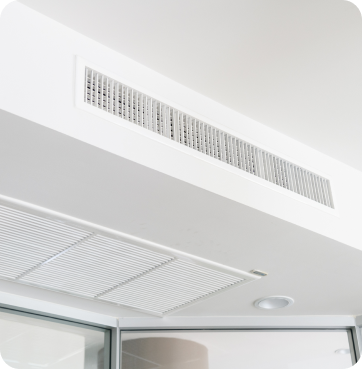
Grilles and Registers
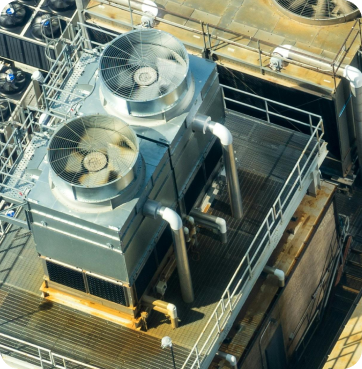
Refrigerant Lines
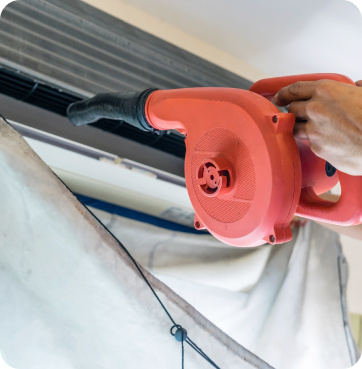
Outdoor & Indoor Units
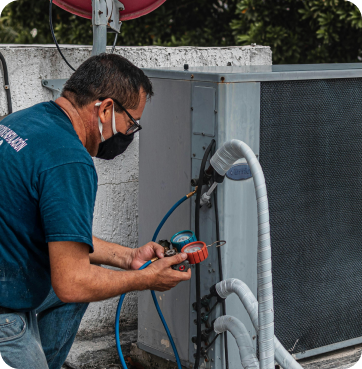
Thermostat

Refrigerant Leaks

Compressor Issues
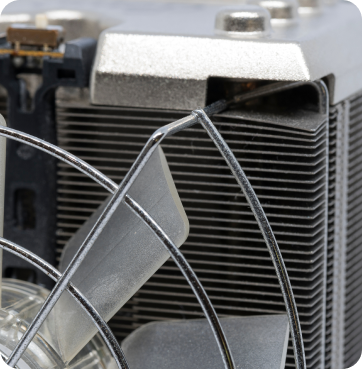
Fan Motor Problems

Thermostat Malfunctions
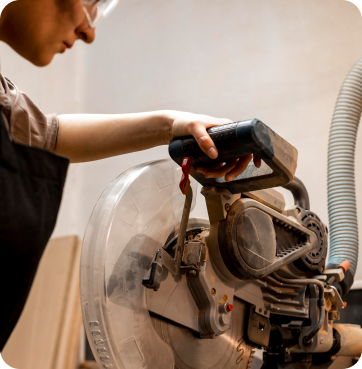
Blower Motor Issues

Capacitor Failures
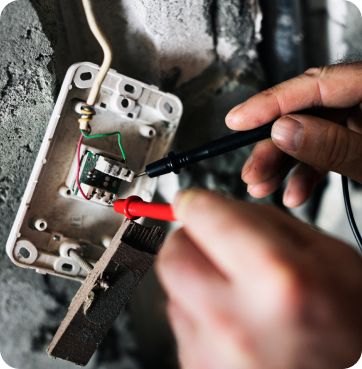
Electrical Problems
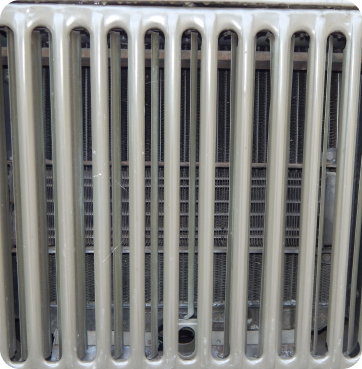
Condenser Coil Problems

Evaporator Coil Issues
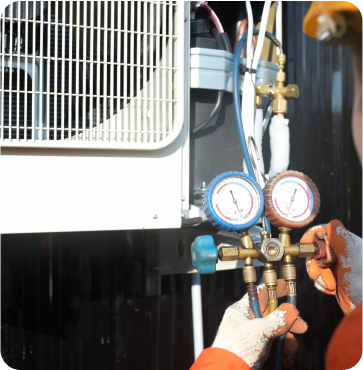
Expansion Valve Problems
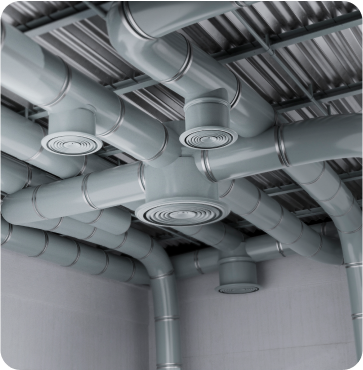
Ductwork Issues
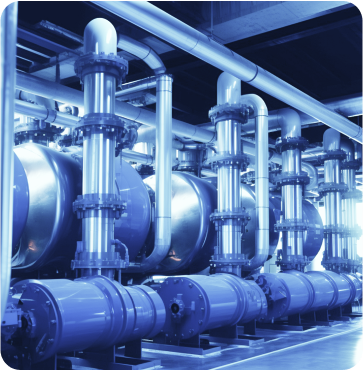
Heat Exchanger Problems
Water Leaks
Control Board Issues
Airflow Problems
HVAC Ronkonkoma NY: the trucks start on Elder Lane
Commercial HVAC, Ronkonkoma refrigeration and home heating and cooling all leave from one yard on Elder Lane, because this is the town Temperature Control Systems works out of rather than one it drives out to.
562 Elder Lane is a yard, not a mailing address
Plenty of contractors list a local address and dispatch from somewhere else. Ours is the shop. The office, the parts and the service trucks are all at the same place on Elder Lane, and the technicians who work in Ronkonkoma finish their commute before the first call of the day is taken.
It is also why so much of the planned work sits close to home. Maintenance agreements, seasonal changeovers and installation surveys get scheduled around the towns nearest the shop, and this is the nearest of all of them.
What a visit includes is the same here as anywhere else we work. Being based in town removes the travel a job would otherwise start with, and it means the crew already knows the streets.
Larry Brett has run the business from this address since 1999, and the number on this page reaches that office. There is no call center standing between you and the people who will be doing the work.

How a phone call turns into a truck outside your building
Most people only ever see the last step. Here are the five that happen at our end, in order, and what each one is for. Pick a step to read it.
You reach a person, and they ask four things
The questions are close to the same every time, and none of them is small talk. Each one decides something about what leaves the yard.
- What the equipment is, including whatever the nameplate says. A rooftop unit and a walk-in condensing unit are different trucks and different parts.
- What it is doing now. Warm box, no heat, water on the floor, a breaker that will not stay in. The symptom narrows the fault before anyone drives anywhere.
- The address, and whether the building is open.
- How we get to the equipment. A locked roof hatch, a gate code, a unit behind a service counter at lunchtime: knowing that in advance is the difference between a repair and a wasted trip.
The job goes to the nearest technician who knows that equipment
Emergency work is assigned on two things at once: who is closest and who is qualified on the system that failed. Refrigeration and air side are not interchangeable, so the closest truck is not always the right one.
Ronkonkoma is the town where those two answers line up most often. A call here frequently lands on a truck that is still in the yard, or one already working a few streets over, because this is where the day starts and where a lot of the standing work sits.
Planned work gets a window you can build a shift around, including early starts and after hours.
The truck is already stocked, and the description tops it up
Service trucks carry the parts that fail most often on the equipment we service most: contactors, capacitors, motors, relays, controls, gaskets and refrigerant. That stock is the reason a straightforward fault gets fixed on the visit instead of written up and scheduled.
The description you gave on the phone is what adds to it. If the symptom points at a specific component, the technician can pick it up on the way out rather than find the gap standing in front of the equipment. The more exact you can be, the better that guess gets.
Restocking happens here on Elder Lane, which is a detail nobody thinks about until the day it matters.
Drop cloths first, then the fault, then the price
Work areas get covered before anything is opened, and the site is left the way it was found. In a working kitchen or on a shop floor that is the only way to do the job without shutting the room down for the afternoon.
Then the actual fault gets found before a part is named. A warm walk-in can be a failed compressor, and it can just as easily be defrost, a dirty condenser, a door that has stopped sealing or a fan motor that has quit. You hear the price while the technician is still standing there, before anything is ordered.
When the part is not on the truck
Some parts nobody carries on a truck: a specific board, a compressor for an older model, a coil built to a size. When the repair needs one of those, you are told that day what it is and what happens next.
This is the step where a Ronkonkoma address counts. The shop, the stock and the job are all in the same town, so a return trip is an interruption to the day rather than a fresh dispatch across the county. On refrigeration, what the equipment can safely be asked to hold in the meantime gets settled on site rather than guessed at afterward.
Two kinds of customer, often on the same street
Storefronts and food businesses along the retail stretches, medical offices, small warehouse space out toward the airport, and houses on almost every side of it.
The equipment that cannot go down during service
For restaurants, delis, groceries and convenience stores the urgent equipment is nearly always cold: walk-in coolers and freezers, reach-ins, prep tables, display cases and ice machines. An hour of failure there is counted in product rather than comfort, which is why refrigeration gets its own emergency response.
The air side is packaged rooftop units over sales floors and dining rooms, split and zoned systems in offices and medical suites, and kitchen exhaust where food is cooked. Rooftop work here usually means a lift or a crane and an off-hour start, so nobody is trading around us.
Central air, furnaces, boilers, heat pumps and mini splits
Residential work here runs the full range: central air installed and repaired, gas and electric furnaces, boilers, heat pumps and ductless mini splits, plus the tune-ups that catch a tired capacitor in April rather than during the first real heat wave.
Sizing comes from a survey of the actual house. Ronkonkoma has too many building types on too many lot sizes for a rule of thumb to be safe, and an oversized system short cycles, leaves rooms clammy and wears itself out early.
Four kinds of building, four different jobs
The buildings here were not all put up to one pattern, and the equipment in them behaves accordingly. This is what we tend to find, and what it changes.
Long, flat duct runs and one lonely bedroom
Single-level houses spread the ductwork sideways, and the room at the far end of the trunk is the one that never quite gets there. The fix is usually airflow rather than capacity: return sizing, register balance and the condition of the runs, checked before anyone talks about a bigger unit.
Upstairs rooms finished after the system was sized
Smaller houses with rooms tucked under the roof line are a familiar pattern here. The upstairs was often finished later, so it is fed by a system that was never asked to cover it, and returns up there are undersized or missing. Adding a mini split zone is frequently cheaper and quieter than tearing the ducts apart.
More volume, more zones, less room for guessing
The bigger houses on the higher ground near Lake Ronkonkoma carry more volume and more glass than the rest of the town. Those get a proper load calculation and, more often than not, zoning, because one thermostat in a hallway cannot speak for a house that size.
Rooftops over occupied rooms
Medical offices, storefronts and warehouse space share one problem: the equipment sits on the roof above people who are working. Access, lift scheduling and the hour of the day matter as much as the repair itself, and all three get settled before the truck is booked.
Nights, weekends and holidays, out of the same shop
Emergency HVAC and refrigeration service runs every day of the year, and a call at two in the morning is handled the way a call at two in the afternoon is.
A box climbing on a Friday night
A walk-in or a display case losing temperature is the call we treat as most urgent, because the clock is running on stock that was already paid for. Nights and weekends are when it tends to happen, and when a lot of contractors are not answering.
A house with no heat in January
No heat overnight in the middle of winter is an emergency by any sensible definition, and it is answered as one. So is a rooftop unit failing over a dining room in a July heat wave, where the business closes if nobody comes.
Where the shop sits, and the roads we are on every week
Callers describe where they are by landmark far more often than by street number, and in Ronkonkoma that works fine for us.
The shop is at 562 Elder Lane, on the Expressway side of town. From there the week runs along Portion Road and Smithtown Boulevard going across, Hawkins Avenue and Ocean Avenue going up and down, Lake Shore Road and Lake Avenue around the water, and Johnson Avenue, Nichols Road and Holbrook Road out to the edges. Express Drive South and Route 454 pick up the commercial addresses near the Expressway.
People place themselves by the train station and the Ronkonkoma Hub, MacArthur Airport, Sachem High School North, Raynor Park, Sacred Heart Church or simply the lake. Any of those is enough, and the answer is the same wherever in town it turns out to be.
What people say once we have been out
"Very professional workers and reasonable prices. Did a great job and left no mess behind! Definitely recommend!"
Being local, response, permits and agreements
Are you really based in Ronkonkoma?
Yes. The shop is at 562 Elder Lane, and it has been the base of the business since 1999. The office is open Monday to Friday, 8am to 5pm, and the emergency line is answered around the clock on 631-710-6257.
How quickly can someone get to me here?
Typical on-site response is within 90 minutes, and that is the figure we give everywhere rather than a special one for the home town. Emergency calls run nights, weekends and holidays. Quotes, surveys and installation dates are booked during office hours.
Do you take house calls as well as commercial work?
Both, from the same shop and on the same trucks. A restaurant walk-in and a family with no heat are handled by the same technicians, and neither is a sideline. If a building has a rooftop unit, a walk-in and a furnace, one company answers for all three, HVAC and refrigeration alike.
Who handles the permit and the inspection on a new system?
We do. Installations are permitted and inspected with whichever town or village has jurisdiction at your address, and which one that is gets established at the survey rather than assumed. The same visit confirms what the existing system runs on and what service is feeding it, before any equipment is specified.
Can I put my equipment on a maintenance agreement?
Yes, and a lot of Ronkonkoma buildings already are. Plans are written to the equipment on site rather than sold as one package, and where a business runs several locations the sites get grouped so the service history stays in one place.
Tell us the address and what the equipment is doing
That is usually enough for us to say what has probably failed, what a visit costs and when someone can be there. Call for anything urgent, or send the details and we will come back to you.