

Air Filters
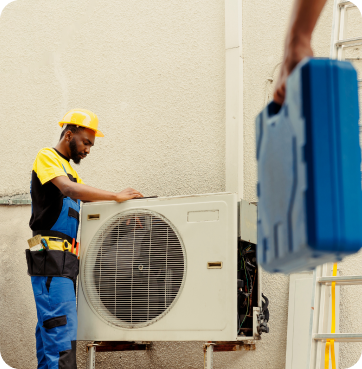
Evaporator and Condenser Coils
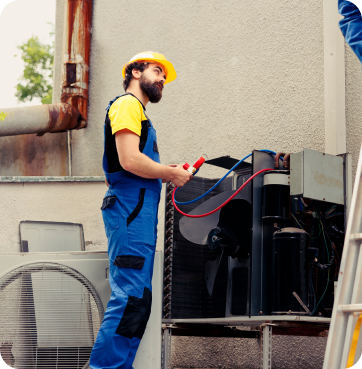
Fan Blades and Motors
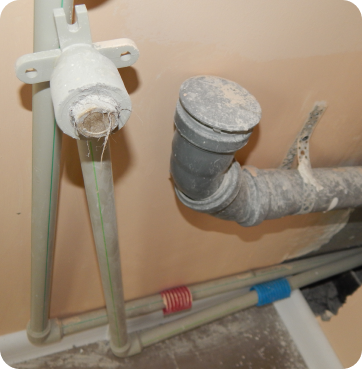
Condensate Drain Lines
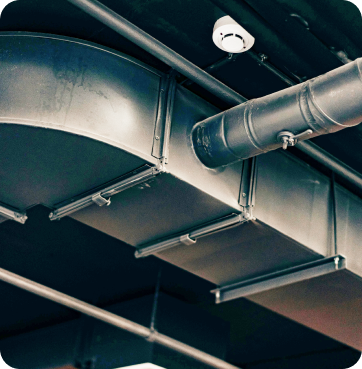
Ductwork
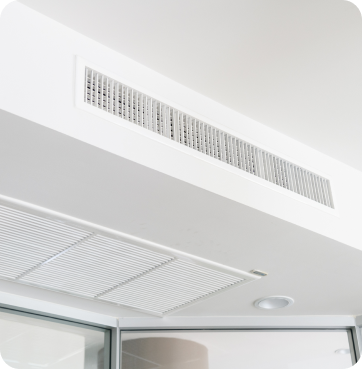
Grilles and Registers
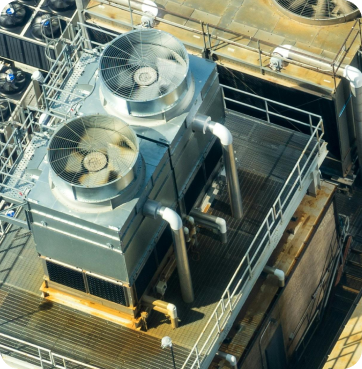
Refrigerant Lines
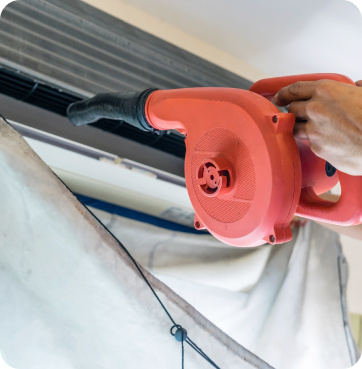
Outdoor & Indoor Units
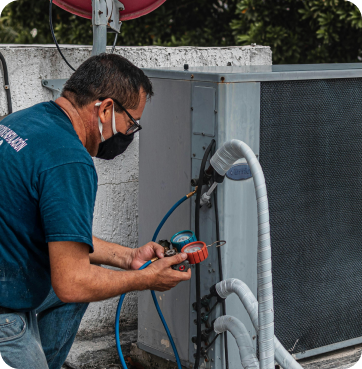
Thermostat

Refrigerant Leaks

Compressor Issues
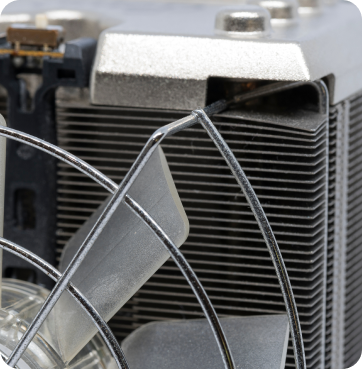
Fan Motor Problems

Thermostat Malfunctions

Blower Motor Issues

Capacitor Failures
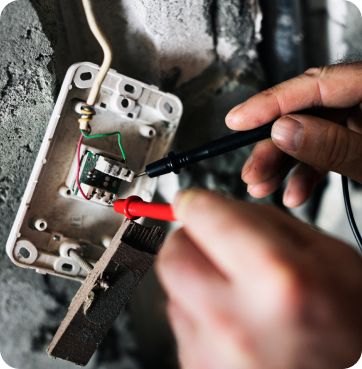
Electrical Problems
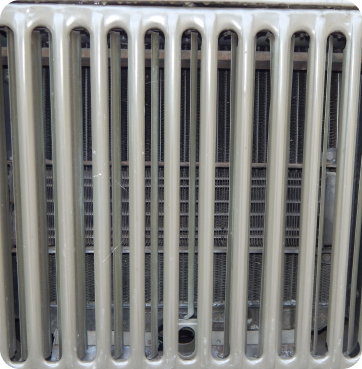
Condenser Coil Problems

Evaporator Coil Issues
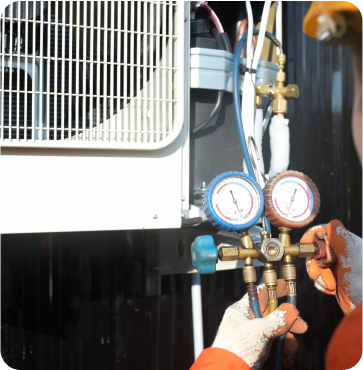
Expansion Valve Problems
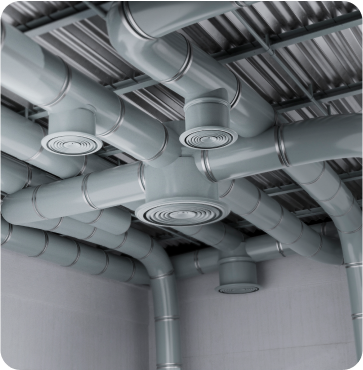
Ductwork Issues
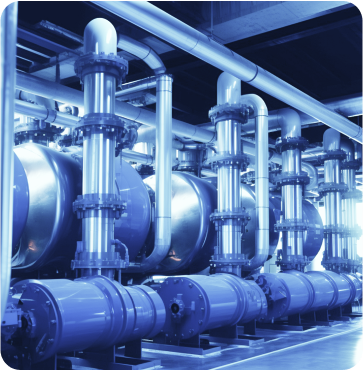
Heat Exchanger Problems
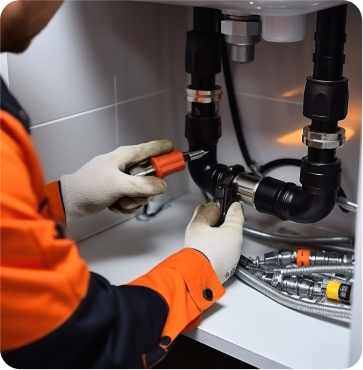
Water Leaks

Control Board Issues
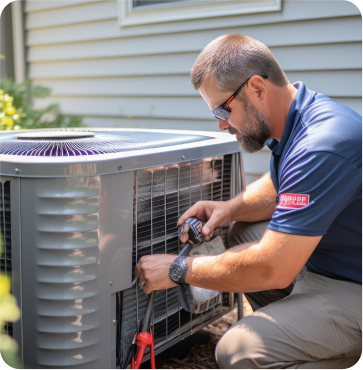
Airflow Problems
HVAC Islip NY: on this side of the bay, siting comes first
HVAC Islip customers get the same trucks and the same crew as the rest of Suffolk County, plus one question at the start of every job that inland towns never need: where the outdoor unit sits, and what stands between it and Great South Bay.
Kitchens, storefronts and houses, often on the same block
Islip runs from the commercial stretches through the middle of town down to residential streets that end at the water, and both ends of that are our work.
The box inside, the machine outside
Food businesses along the commercial stretches run on refrigeration, and a failure there is counted in product, not comfort. What quits is often not the box in the kitchen but the condensing unit behind the building, in a yard with a fence on two sides and deliveries stacked against the third.
Air side, it is packaged rooftop units over sales floors and dining rooms, split systems in offices and medical suites, and kitchen exhaust wherever there is a hood.
Central air, heat pumps and the unit behind the house
We install and repair central air, gas and electric furnaces, boilers, heat pumps and ductless mini splits, plus the tune-ups that catch a tired capacitor in April, before July gets a vote.
What changes here is the survey. Load and duct condition still decide the equipment. On streets that run down toward the water, the position of the outdoor unit gets measured with the same seriousness, because it is the half of the system the weather actually touches.
What salt does to a coil, and why position decides how much lands
The mechanism is the same on every coil near the water. How much of it a given unit has to deal with is not.
A condenser coil is aluminum fin pressed onto copper tube. Put salt in solution across that joint and it behaves like a small galvanic cell. The fins pit, go powdery and lose their grip on the tube, so heat transfer falls away while the coil still looks whole from six feet back. The first sign is rarely a dead unit. It is a system that runs longer for the same room temperature, then trips out on the one afternoon nobody can spare it.
What differs unit to unit is how much salt-laden air gets pulled through those fins, and whether anything ever washes it back off. Both are settled by where the unit was set and what has been built or planted around it since. Two houses on the same street can be a different job.
Three things decide it, and all three are about position: how much of that air reaches the coil, whether rain ever washes it back off, and whether there is room to rinse it properly. So coil condition and rinse interval get looked at on the maintenance visit rather than assumed from a calendar.

Describe where your outdoor unit sits
Four questions about position and clearance, and what the answers mean for the coil, for the work worth doing, and for what a technician checks on arrival.
Pick an answer to each of the four
The read appears here once all four are set. These are the same questions a technician asks in the driveway before the cover comes off.
A hard posting for a coil
This unit takes air off the water on its open side, keeps most of what lands on the fins, and cannot be washed without taking something apart. Lost capacity arrives quietly, so it gets lived with instead of noticed, and it announces itself on a hot day.
Clearance first, because nothing else is possible until the cabinet can be reached from more than one side. After that, put the coil on a rinse interval and have it looked at every visit, not every few years.
Fin condition past the outer row, powdering where fin meets tube, fins laid flat by a pressure washer, the temperature split, head pressure against outdoor temperature, and the pad and fasteners.
Working exposure, and it is manageable
Salt reaches this coil, but either the position or the clearance is helping. Units sited like this hold up while somebody is looking at the coil and slide when nobody is. The brand on the cabinet is not what decides it.
Open up whatever side is tight, keep planting cut back off the cabinet, and get the coil rinsed properly instead of sprayed from one side. If a hose does not reach it, fix that first.
Fin color and grip on the tube, debris packed into the lower fins, the temperature split, and whether the cabinet has its rated clearance.
Sheltered, but not exempt
The building is doing most of the work. Air still reaches the coil, but far less arrives straight off the water, and what lands is more likely to be washed off by weather. This is where we would move a unit given the chance.
Keep it that way. Good positions go bad through a new fence, a shed or a hedge growing in against the cabinet, and the airflow goes before anybody connects the two. A rinse on the seasonal visit is enough.
The coil face for anything packed in, clearance against whatever has been added since the install, drainage around the pad, and the readings that apply anywhere.
This unit is in a good spot
Set back from the water, shielded, open around the cabinet and washed down now and then. Here the coil is not what we would expect to fail first, and run hours, airflow and controls go back to being the usual suspects.
Nothing coastal. Ordinary seasonal service applies, and a coated coil is unlikely to earn its extra cost here when the unit is replaced.
Filter and blower indoors, charge read against the conditions on the day, capacitor and contactor, and the condensate path, which causes more trouble at this address than the coil will.
The one day the position is genuinely up for discussion
An existing condenser stays where it is unless there is a reason to move it. A replacement is the exception, and near the water that is worth ten minutes before anything is ordered.
On a changeout the pad, the line set and the electrical all get touched anyway, so the unit's position is open for the only time in its working life. Four decisions get made that day, each of them cheap while the crew is already there and expensive as a second visit later. They belong in the installation quote.
Where the pad goes
Moving the unit to the sheltered elevation, or behind a wall that already exists, changes what it deals with for the rest of its service life at the cost of some extra line set. Cheapest item here, and the one most often skipped, because the old pad is right there.
How high it sits
A cabinet set low where water gathers after a storm sits in the worst of what that water leaves behind. A taller pad or a stand keeps the base rail and the bottom of the coil clear of it.
Whether a coated coil is worth it
Manufacturers offer coil coatings and corrosion-resistant options, and they cost more than a standard coil. Whether the difference is earned depends on this address and this position rather than on the town name.
Screening that does not choke it
Hiding a condenser is a fair thing to want. Screening set away from the cabinet, open at the top and clear of the discharge, leaves the rated clearance intact. Built tight it costs airflow every hour the system runs, and holds salt against the fins.
Roofs, yards and service passages
Commercial equipment in Islip lives in two places, and both of them are outdoors with nobody walking past.
Packaged units over a sales floor
A rooftop unit gets the same air a ground-level condenser does, with less shelter and far less attention, because it is out of sight from the day it is craned into place. Coils, panels, fasteners and curb flashing are all on the list when we are up there. Access, the lift and the hour get settled before the truck is booked.
Condensing units in the yard out back
The machines holding a walk-in or a line of display cases usually stand in a yard or a side passage where clearance was never part of the plan. Crates, fencing and deliveries build up, airflow drops, head pressure climbs, and the box loses temperature on the hottest day of the year. Clearing that space is often the whole repair.
The equipment that never comes indoors
Cooling equipment gets a season off. Anything that heats from outside does not, and that changes what siting is worth here.
A heat pump is the one piece of outdoor equipment working in both seasons, so its exposure runs all year instead of pausing in October. That is why the siting conversation matters more on a heat pump than on a cooling-only condenser at the same address.
Winter adds its own requirement. Defrost puts water on the unit and under it, so a cabinet standing where puddles gather freezes into the ground with the bottom of the coil in the worst of it. Room underneath and somewhere for that water to go are part of the install, not something to sort out in February.
Furnaces and boilers sit indoors, so salt is not their story. Those jobs turn on combustion air, venting and the state of the existing distribution, and what the system in front of us runs on gets established at the survey, never guessed at from the street.
Nights, weekends and holidays
Emergency service runs every day of the year, and typical on-site response is within 90 minutes. That figure is the same in Islip as at either end of the run, and it holds at two in the morning.
Refrigeration gets the fastest hands, because the clock is running on stock that has already been paid for. A walk-in or a display case climbing on a Friday night is the call we treat as most urgent, and it lands at the hour a lot of contractors stop answering. What the equipment can safely be asked to hold in the meantime is settled on site with the person who owns it.
No heat overnight in January is an emergency by any sensible reading, and a rooftop unit failing over a dining room in July closes a business for the evening. Both get the same technicians.
The roads we are on here, and where the calls come from
Callers place themselves by landmark far more often than by house number, and that works fine for us.
Montauk Highway and Main Street carry most of the commercial addresses through the middle of town. Islip Avenue and Carleton Avenue run north and south across Sunrise Highway, and Union Boulevard, Suffolk Avenue and Brentwood Road pick up the rest. South of Montauk Highway the streets turn toward the water, and that is the half of town where the siting questions on this page start to bite.
The surrounding hamlets are covered by the same trucks: Central Islip and Brentwood to the north, East Islip and Oakdale to the east, Bay Shore to the west, Great River along the Connetquot.
Coverage, coastal coils, rinsing and permits
Do you cover all of Islip, or only the hamlet?
All of it, plus the hamlets around it. Central Islip, Brentwood, East Islip, West Islip, Bay Shore, Oakdale and Great River are worked by the same technicians on the same terms, commercial and residential alike.
Does living near the bay mean I need a special unit?
Not automatically, and anyone who says yes without looking at your property has not earned the sale. Position and clearance do most of the work and cost nothing to get right at installation. A corrosion-resistant coil is worth weighing where the siting is genuinely exposed, and money wasted where it is not.
How often should a coastal condenser be rinsed?
More often than an inland one, and the interval is set against what your coil actually looks like, not against a rule printed somewhere. That judgment gets made at the first visit and revisited each time. A fixed number would be easier to quote and less honest.
Who handles the permit and the inspection?
We do. Installations are permitted and inspected with whichever town or village has jurisdiction at your address, and which one that is gets established at the survey rather than assumed. The same visit confirms what the existing system runs on before any equipment is specified.
Tell us the address and what the equipment is doing
That is usually enough for us to say what has probably failed, what a visit costs and when somebody can be there. Call for anything urgent, or send the details and we will come back to you.