
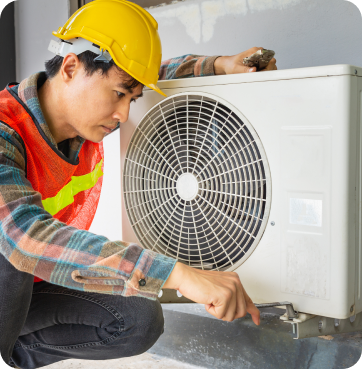
Air Filters
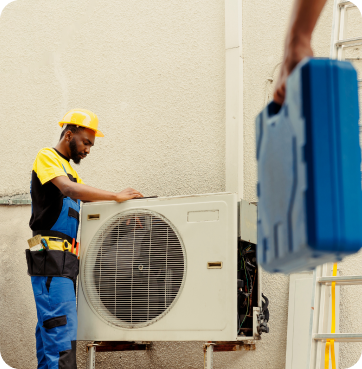
Evaporator and Condenser Coils
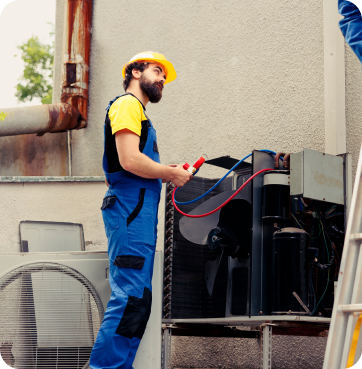
Fan Blades and Motors
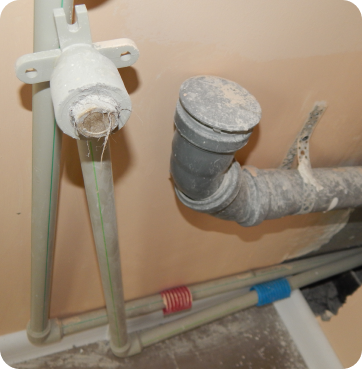
Condensate Drain Lines
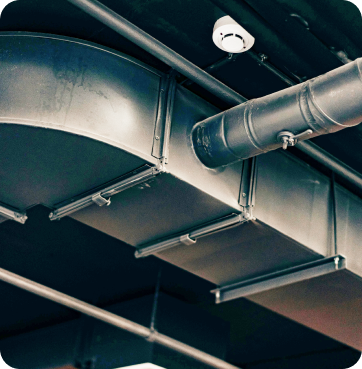
Ductwork
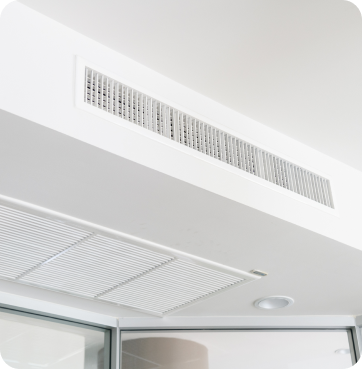
Grilles and Registers
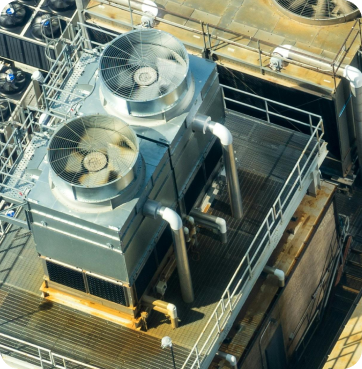
Refrigerant Lines
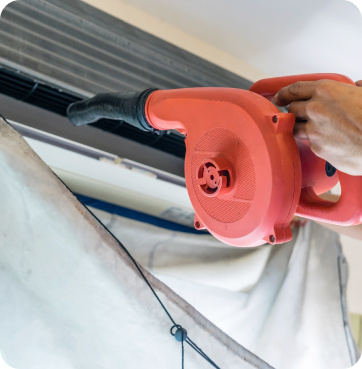
Outdoor & Indoor Units
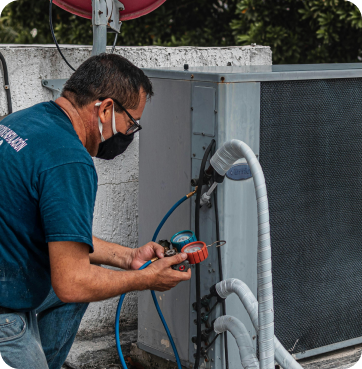
Thermostat

Refrigerant Leaks

Compressor Issues
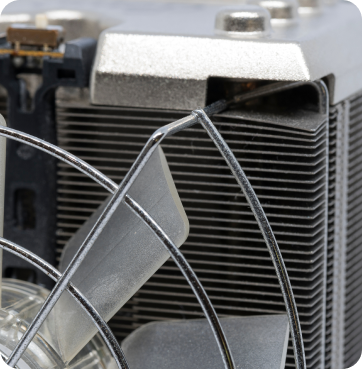
Fan Motor Problems
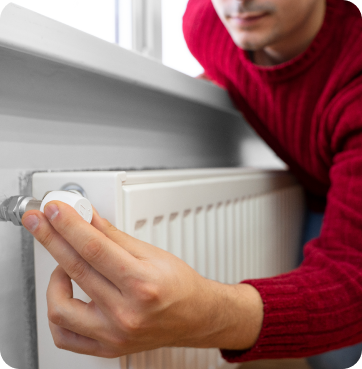
Thermostat Malfunctions

Blower Motor Issues

Capacitor Failures
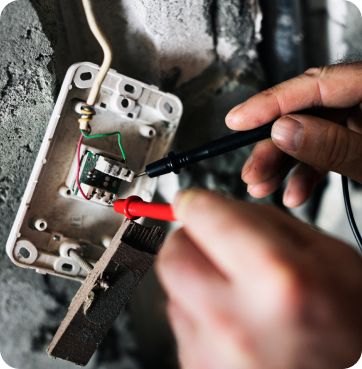
Electrical Problems
Condenser Coil Problems

Evaporator Coil Issues
Expansion Valve Problems
Ductwork Issues
Heat Exchanger Problems
Water Leaks

Control Board Issues
Airflow Problems
Emergency AC repair on Long Island, and what to do for the people in the house first
Emergency AC repair is answered by a person on 631-710-6257, every day of the year. Typical on-site response across Suffolk and Nassau County is within 90 minutes.
Before you dial, one thing. Whether the outdoor unit is dead silent or running hard points at two different faults, so it decides what goes on the truck. Worth checking only if somebody can do it without standing out in the heat.
Heat is the fast emergency, and it works on people
A cold house takes most of a night to turn serious. A hot house can do it in an afternoon. Nothing in the building is at risk either, no water in a wall, nothing to split, so all of the risk sits with the people and animals inside.
Who in the house is actually at risk
Most healthy adults find a hot house miserable and safe. These are the people who do not.
Why humid heat is the harder kind
A body sheds heat by sweating and letting it evaporate, and evaporation needs somewhere for the moisture to go. Summers here come off the water already loaded with it, so the air has little room to take more and the body's own cooling is throttled at the worst moment.
Small bodies pick up heat faster, sweat less well, and cannot move somewhere cooler or ask for a drink. A baby gone quiet and floppy needs help now.
Thirst arrives later and weaker with age, sweating gets less efficient, and the heart has less spare capacity for cooling. Anyone living alone gets into trouble quietly.
Cooling down means moving more blood to the skin and breathing harder, which costs a heart or lungs already near their limit.
Some blood pressure and heart drugs, diuretics, psychiatric medications and antihistamines change how a body sweats or holds fluid. Ask a pharmacist, not us.
Dogs and cats lose heat by panting, which runs on evaporation too, so it fails in humid air for the same reason ours does.
A bedroom under an unconditioned attic is the hottest room in the house. Fine downstairs at nine can be a bad room at two.
The two things to watch for, and the difference between them
Get them cool, and keep watching
Heavy sweating, skin cool and clammy, weakness that came on fast, headache, dizziness, nausea, cramps. Move them somewhere cooler, feet up, clothing loosened, cool damp cloths at the neck and wrists, small sips of water. If they do not improve, or vomiting starts, get medical help.
Stop reading and dial 911
Hot skin, sweating that has stopped, confusion, slurred speech, staggering, a seizure, or someone who cannot be roused. Call 911 first. Then get them into the coolest place you have, outer clothing off, and cool them with a cool shower, wet towels or ice packs at the neck, armpits and groin. Nothing to drink for anyone confused or not fully awake.
The night after a hot day is not automatically relief
A house spends a hot day taking heat into everything solid in it and into the roof space, and after sunset all of that gives it back. An upstairs bedroom can still be climbing while the air outside has started to drop, and two or three hot days running means the house never resets.
Four questions, and an honest answer about tonight
This sorts on the people in the house, not the equipment. One answer sends you to 911 and one tells you to book the morning and go to bed. Neither of those is a job for us, and both matter more than a booking does.
Two of the four answers are about people, not equipment
One is a 911 call, one says get out of the heat before anything else, one books a technician tonight, and the last says wait for the morning.
Treat that as a medical emergency, and not as ours
Call 911 before anything else, then cool them the way the heat stroke card sets out further up, and give nothing to drink to anyone who is not fully awake. Call us once help is with them.
The house comes second to the people in it
Whether somebody is already feeling it or the house has simply gone past what the people in it should be sitting in, the fastest relief is not a repair. Get everyone affected into cooled air: a relative, a library, a supermarket, a mall, or a cooling center if your town has opened them. Cool water, no exertion, and 911 for anyone who becomes confused or cannot be roused. Then call 631-710-6257 and say who is at risk.
This one is worth an after-hours call
Calling tonight is what stops it getting worse. A house that has stopped recovering overnight starts each day warmer than the last, so a weekday appointment leaves the hardest part still ahead of you. Call 631-710-6257 and say who is in the house, because that decides the order calls go out in.
If anyone under that roof is on the at-risk list, get them somewhere cooler while the repair is booked. That part does not wait for a technician.
The morning is genuinely the better call here
Everyone is coping, the house still lets go of its heat after dark, and nothing here turns dangerous overnight. A daylight repair with a supply house open is better anyway. Spend tonight the way the next section describes and call first thing.
Three things change this answer: anyone starting to feel unwell, the house no longer recovering after dark, or a forecast that keeps the heat on for days. Where there is an infant or an older adult in the house, check on them through the evening rather than assuming.
What genuinely helps, and what only feels like it does
Some of what people reach for in a hot house helps a great deal, some of it does nothing at all, and one very common move stops working at exactly the point it is needed most.
Leaving is a real answer, not a last resort
If anyone in the house is on the list above, getting them into a cooled building for the afternoon does more than anything you can do to the building. A library, a mall, a supermarket, a relative with working cooling. Cooling centers, where a town or the county opens them in a declared heat emergency, are listed on the town or county website.
Close the house to the sun, then open it at the right time
Most of the heat arriving on a sunny day comes through the glass, so blinds and curtains go shut on whichever side the sun is on, and shut early rather than once the room has heated up.
Opening up only helps while the air outside is genuinely cooler than the air inside, and the test is the air, not the clock. Windows thrown open at three in the afternoon bring the heat wave indoors. Late evening through early morning is usually the window, and shutting up again before the sun reaches the house keeps what you gained.
The rest of the list
- Drink before anybody is thirsty. Older adults and children often will not ask, so hand it to them.
- Cool the body rather than the building. A cool shower, or a damp cloth on the neck and wrists, beats anything you can do to the house.
- The basement is the coolest floor in almost every house here, and sleeping downstairs is a genuine answer.
- Switch off what makes heat: the oven, the dryer, a desktop computer left running.
- A box fan drawing cool night air in at one window, with another pushing hot air out on the far side, moves more than either alone.
Fans cool people, not rooms
A fan does not lower the temperature of a room. It moves air, and its motor adds a little heat of its own, so one running where nobody sits makes the house slightly worse. What it does is help sweat evaporate off skin, which cools the person in front of it. Point them at people and switch off the rest.
The part that matters in a heat wave: once the air is hot enough, moving it across skin stops helping and starts working against you, because you are blowing hot air over a body that has run out of ways to shed heat. Air that feels like a hair dryer rather than a breeze is cooling nobody, and that is when someone at risk needs to be somewhere else.
A minute of checks, and the one that says switch it off
Five things, no tools, no panels off. None of it is a repair. It is what turns "there is no cooling" into something a dispatcher can act on.
- The thermostat. Set to cool, target below what the room reads, fan on Auto rather than On, screen actually lit.
- The filter. Pull it and look toward a window. One you cannot see daylight through is choking the coil.
- The power. Usually one breaker for the outdoor unit and one for the furnace or air handler, plus a wall switch beside the indoor unit. Reset a tripped breaker once, and once only.
- The outdoor unit. Nothing packed against the sides, no winter cover still on it, nothing grown into it.
- Ice. Look at the copper line where it leaves the house and at the indoor unit. Frost or a solid white sleeve answers the whole call.
If you find ice, switch the cooling off
Turn the cooling off at the thermostat and set the fan to On. Room air over the coil thaws it far faster than shutting everything down, and put towels underneath, because all of that ice becomes water.
The instinct in a heat wave is the opposite, to run it harder and set it lower, and that makes it worse every time. A coil blocked with ice gets less air, which makes it colder, which makes more ice, so the system delivers no cooling at all while the compressor takes the beating. Why coils freeze is on the air conditioning repair page.
The line you do not cross
The capacitor inside the outdoor unit holds a charge after the power is off and can hurt you. The refrigerant circuit is sealed and takes certification to open. A breaker that trips a second time is reporting a fault, not asking to be flipped again. Never put a hose on a condenser that still has power to it.
From the phone call to the driveway
An emergency AC repair starts on the phone, and the three minutes spent there decide where a house sits in the night's list. This is what gets asked, what comes back, and what the first ten minutes on site look like.
The address, how a technician reaches the outdoor unit after dark, where the indoor unit sits, what the system does when the thermostat calls, and who is in the house. That last one sorts the night.
A realistic arrival window rather than a number meant to stop you ringing anyone else. Typical on-site response across Suffolk and Nassau County is within 90 minutes, and a heat wave is the week that figure is under most pressure.
The electrical side of the outdoor unit gets worked first, because that is where most no-cooling calls end and it proves quickly. Then measurements. Plenty finish that night on a part off the truck.
When it cannot be finished tonight
Some faults end with a part that has to come off a supplier's shelf in the morning. You should hear that plainly on the night, together with what the building can be made to do until then and whether anyone in it would be better off somewhere else.
"this guy saved my life i woke up i thought i was in the amazon my house felt like 100* i called up he was there within the hour and fixed my ac for a reasonable price will deff use again"
Antonio salvatore Google reviewWhy so many systems quit in the same week
Almost all of these calls land on two or three afternoons a year rather than spreading themselves across the summer, and the reason for that has nothing to do with luck.
An air conditioner dumps the house's heat into the air outside, and the outdoor coil can only do that because the refrigerant inside it is hotter than the air around it. On the hottest afternoon of the year that difference is at its smallest, so pressure on the high side climbs and the compressor draws more current to push against it. Every electrical part is working hardest on the day it has least margin.
Which is why a marginal capacitor picks that afternoon. One that still starts the motor on a mild June evening will not start it against a high head pressure in August, and the same goes for a pitted contactor and a fan motor noisy since spring. Nothing failed suddenly. The weather raised the bar past where those parts could clear it.
A condenser coil carrying a season of cottonwood and grass clippings copes in mild weather because the margin hides it. In real heat the margin is gone and it cannot get the heat out at all.
On an ordinary day a system cools the house and shuts off. In a heat wave it never catches up, so it runs almost without a break, and parts that wear by the hour get through a lot of them in a week.
The same weather is doing the same thing to every system in the county at once, so calls, trucks and parts counters are busy in the same window. It is the honest reason a heat wave is the worst week to need a part.
Making next summer less likely to do this
Nearly everything on that list can be caught with a meter and a hose in April. A weak capacitor reads weak long before it refuses to start a compressor against high pressure, and a coil packed with cottonwood washes out easily while the weather still forgives a dirty one. That is the argument for air conditioning maintenance before the season rather than during it.
Replacement is the other conversation for a cool month, and it needs a load calculation and time to compare equipment. Air conditioning installation covers how, and the air conditioning category has the rest. For a store, a restaurant or an office, read emergency HVAC repair for commercial buildings.
Emergency AC repair, the questions that come in at night
It is nine at night and the house is hot. Do I call now or in the morning?
Answer the four questions in the triage and you get a straight answer to exactly that. Anyone at risk from heat, anyone already feeling unwell, or a house that has stopped cooling off overnight makes it tonight. A healthy household after one hot day does not.
Is a hot house actually dangerous, or just miserable?
It depends on who is in it. For most healthy adults it is miserable. For an infant, an older adult, anyone with a heart or breathing condition, or anyone whose medication changes how they sweat, it is a real risk. Anyone confused or unable to be roused should be treated as heat stroke, and that is a 911 call.
Do you answer nights, weekends and holidays, and how fast can somebody get here?
Yes. The emergency line runs every day of the year with on-call technicians, and typical on-site response across Suffolk and Nassau County is within 90 minutes. What moves it is where the nearest truck already is. Quotes, replacements and planned work run Monday to Friday, 8am to 5pm, across the towns we serve.
Should I set the thermostat much lower so it catches up faster?
No. A thermostat is a switch, not a throttle. Setting it far below the room does not make the air from the registers any colder, only makes the system run longer without stopping, and if the coil is already starting to ice, longer running is exactly wrong.
The system is running but the air is barely cool. Is that still an emergency?
The machine does not decide that, the house and the people in it do, so answer the triage questions as you would for no cooling at all. Before you call, look for ice on the copper line and check the filter. What gets measured to find the fault is on the air conditioning repair page.
Start with who is under the roof
The address and how to get to the outdoor unit, where the indoor unit sits, what the system does when the thermostat calls, and who is under the roof tonight. That is enough to start an emergency AC repair from, and the last one orders the night.